NCLEX Beginner Guide
How to Start NCLEX Preparation: 7 Proven Steps for Nurses
If you’re wondering how to start NCLEX preparation, the best way is to begin with the right strategy, the right resources, and a realistic study plan. This guide will help you study smarter, stay consistent, and start your NCLEX journey with confidence.
Quick Answer
To start NCLEX preparation, first understand the exam format, assess your strengths and weaknesses, choose one main question bank and one content source, build a realistic study plan, and begin solving NCLEX-style questions with detailed rationale review from day one.
Sponsored
The image below shows a typical study setup many nurses use when they begin their NCLEX preparation journey.
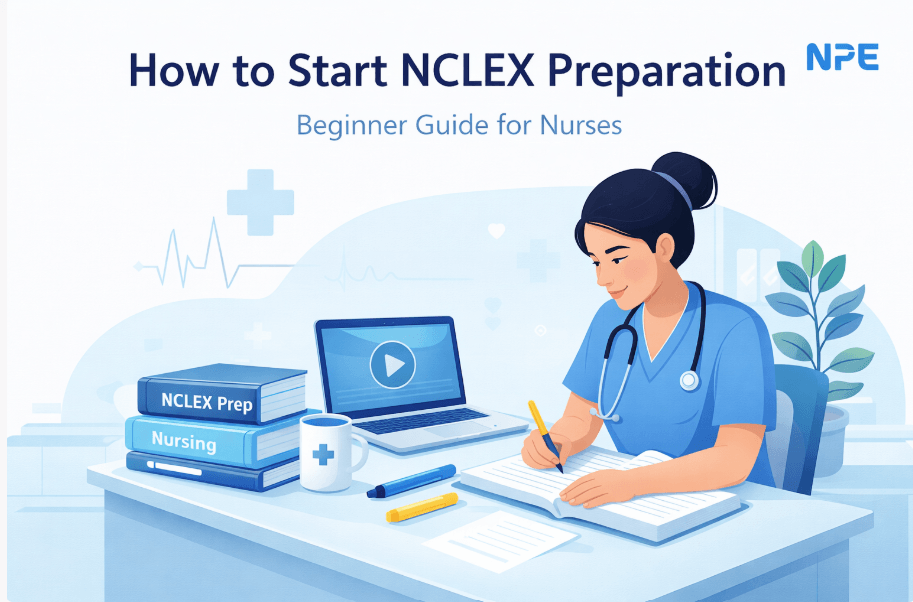
Starting NCLEX preparation with the right study plan and resources helps nurses build confidence and succeed on the exam.
Why Many Nurses Feel Lost at the Beginning
Most nurses do not struggle because they are weak students. They struggle because they start without structure. Some collect too many resources. Some spend weeks reading content without answering questions. Others keep waiting for the perfect time to begin.
The NCLEX is not just testing memorization. It is testing whether you can think like a safe nurse. That means your preparation should focus on clinical judgment, prioritization, patient safety, and decision-making from the very beginning.
Important: You do not need ten resources to pass the NCLEX. You need the right strategy, steady effort, and a system you can follow consistently.
How to Start NCLEX Preparation the Right Way
1
Understand the NCLEX
First, understand what the exam is really testing. NCLEX focuses on safe nursing judgment, not just theory recall. Learn how prioritization, delegation, and patient safety are built into the exam.
2
Assess Your Starting Level
Be honest about your current strengths and weaknesses. Are you weak in fundamentals, pharmacology, maternity, or pediatrics? Your study plan should fit your real level.
3
Choose Limited Resources
Keep your setup simple. Use one question bank, one content source, and one revision notebook or tracker. Too many resources usually slow progress and create confusion.
4
Build a Realistic Study Plan
Your plan should match your routine. Working nurses need a sustainable schedule. Full-time candidates can study more, but consistency matters more than intensity.
5
Start With High-Yield Topics
Begin with fundamentals, medical-surgical nursing, pharmacology, infection control, maternity, pediatrics, mental health, and prioritization.
6
Practice Questions Early
Do not wait until all content is finished. Start solving NCLEX-style questions early so you can understand how the exam asks, tests, and traps candidates.
7
Review Rationales Deeply
Rationales are where real learning happens. Every explanation teaches you why the correct answer is right and why the other options are unsafe or less appropriate.
8
Track Weak Areas
Keep a list of repeated mistakes such as insulin confusion, infection precautions, ECG issues, delegation errors, or maternity concepts you often miss.
Sponsored
The infographic below explains a simple NCLEX study roadmap beginners can follow.
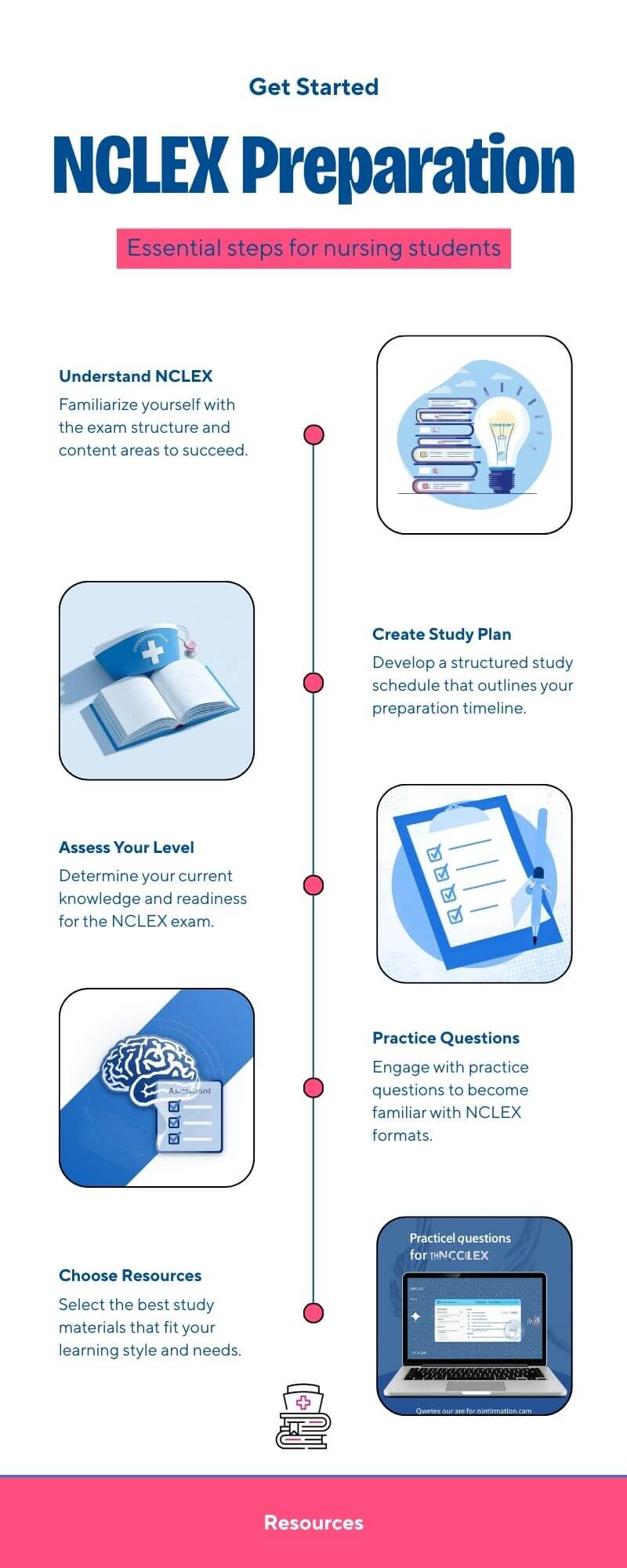
A simple NCLEX preparation roadmap showing the key steps nurses should follow when starting their NCLEX study journey.
Best Resources to Start NCLEX Preparation
A strong NCLEX study plan should combine learning, question practice, revision, and correction. Studying only theory is not enough. Solving questions without reviewing mistakes is also not enough.
Simple Daily Structure
- Morning: Review one topic and make short notes.
- Afternoon: Solve 40 to 85 NCLEX-style questions.
- Evening: Review rationales and revise weak concepts.
Best approach: A realistic plan followed every day is much better than an intense plan that lasts only three days.
You can also explore more nursing learning content through our
Nurses Professional Education homepage,
browse helpful articles in our
nursing blog section,
and check our
practice exam resources
for continued preparation support.
Common Mistakes When Starting NCLEX Preparation
Using Too Many Resources
Too many books, videos, and platforms can confuse you instead of helping you.
Studying Only Content
NCLEX is an application exam. You must practice questions regularly.
Ignoring Rationales
Without rationale review, you miss the most important part of the learning process.
No Weak Area Tracking
If you do not track mistakes, you will keep repeating the same errors.
Waiting for the Perfect Time
You do not need perfect conditions. You need a good starting system.
Comparing Yourself to Others
Every nurse has a different baseline, timeline, and learning speed.
Your 7-Day NCLEX Starter Roadmap
If you feel completely confused, start here. This simple one-week roadmap will help you move from overthinking to actual progress.
Day 1
Understand the exam and choose your resources
Day 2
Assess your strengths and weaknesses
Day 3
Create a realistic study schedule
Day 4
Start fundamentals review
Day 5
Solve your first question set
Day 6
Review rationales in detail
Day 7
Revise and adjust your plan
Official NCLEX Information
For official exam details, registration guidance, and current exam information, nurses should also review the
official NCLEX website.
Using official resources alongside a structured study plan can help you prepare in a much more confident and organized way.
Frequently Asked Questions
How should a beginner start NCLEX preparation?
A beginner should start by understanding the exam format, choosing limited resources, building a study plan, and practicing questions daily with rationale review.
Is 1 month enough for NCLEX preparation?
For some candidates, yes. Strong recent graduates may prepare in 4 to 6 weeks, while others may need more time depending on their baseline and study consistency.
Should I study content first or solve questions first?
The best strategy is to do both together. Review content, solve related questions, and learn through rationales.
How many NCLEX questions should I practice daily?
A practical starting range is 40 to 85 questions daily, depending on your schedule and how thoroughly you review rationales.
What is the biggest mistake when starting NCLEX preparation?
The biggest mistake is starting without a study plan and trying to use too many resources at the same time.
Sponsored
Need Help With NCLEX Preparation?
At Nurses Professional Education, we guide nurses through smarter preparation strategies, better study planning, and a more confident start to the NCLEX journey.
Visit Nurses Professional Education